As Canberra wine celebrates its fiftieth anniversary, it’s fair to ask why, in 1971, two smart CSIRO scientists planted grape vines in sheep paddocks? Could the same soils and climate that produced fine wool also ripen wine grapes? Following different paths, and unknown to one another, Dr Edgar Riek and Dr John Kirk concluded that it could. And they set about doing so.
An old-fashioned natural scientist with a taste for wine, Riek explored wine in fine detail, seeking the company of people with similar curiosity. In 1953, eight years after joining the CSIRO in Canberra, Riek and others founded the men-only Canberra Wine and Food Club.
A frequent visitor to Rutherglen, Riek acquired an appreciation of fortified wine and, largely through his friendship with winemaker Mick Morris, became a skilled maker and blender.
In 1971 Riek and his wife Mary purchased land on the gentle, lower slopes of the Cullarin Range on Lake George’s north-western foreshore. Daughter Helen pastured her horse there while Riek established Cullarin Vineyard.
Collector Wines owner Alex McKay worked on the property during Riek’s ownership. He also led a rejuvenation of the site for the Karelas family some years after they purchased it from Riek.
McKay says, ‘His site selection was absolutely brilliant. It was brilliant how he worked it out’. Riek had figured that even on a very slight slope, warm air moved to the slightly higher northern end of Lake George, providing a measure of frost protection. And Riek had told winemaker Ken Helm how his car windows defrosted as he drove along that section of the lake.
McKay adds, ‘the soil, drainage and aspect” all suit grape growing, and ‘you would struggle to find better sites in the area’.
‘I thought we had Burgundy conditions’, declared Riek at a November 2015 industry lunch, explaining why chardonnay and pinot noir became the first of around 40 varieties he planted at Cullarin over the coming years.
John Kirk, now 86, acquired his taste for wine in post-World War II Ireland. After spending the war years in England, the under-age Kirk returned home to become the non-drinking (he claims) cellar manager at the family’s Hydro Hotel in Lisdoonvarna, a western Ireland spa and music town.
Curious, but knowing nothing about wine, Kirk learned on the job and by reading. The practical lessons came later, he says, over bottles shared with his father.
Kirk arrived in Canberra from Ireland in 1968 and recalls, ‘I’d joined CSIRO and we used to drive around the countryside, get the feel of the place and as I drove around I was always surprised that there were no vineyards here …I thought, sure, this is warm enough to ripen grapes. So I enquired around, but the story in the industry was that it was too cold. But anyway I did my research and got this climatic data for Bordeaux. And it turned out to be not similar but identical. The temperature variation through the season is exactly the same in Canberra as in Bordeaux. So clearly they can ripen grapes there, we should be able to ripen grapes here’.
Kirk decided to buy land and at Murrumbateman found what he was looking for. A man named Ian Widdowson, ‘had a spare block he wanted to sell and that was Clonakilla. So I was interested and asked if I could dig a hole. He said yes, so I came out with a spade and dug the hole. I liked the look of the soil, although I was no expert on soil. And I just liked the way the grass was growing. There weren’t many trees but such trees as there were looked good. It just spoke to me. This looked good. What I now know is this was on the volcanic rock and that gives rise over the thousands of years to much deeper, much better soils than the sedimentary rocks. So I made him an offer, he said he accepted. I actually paid $9,600’.
With land and Canberra’s perceived Bordeaux-like temperatures, Kirk ordered vine cuttings from Premier Nurseries of Griffith NSW. In that first year he planted riesling and the Bordeaux varieties cabernet sauvignon, semillon and sauvignon blanc. Four hundred ‘black shiraz’ cuttings arrived a year or two later.
Of the four varieties planted in 1971, riesling proved to be the standout. ‘Riesling is very good. It can’t fail in the district’, observes Kirk. But he didn’t know that in 1971. Nor could he have predicted the emergence of shiraz as the other district hero, nor of Clonakilla’s unique shiraz–viognier blend that from 1992 changed perceptions of Australian shiraz internationally and marked Canberra as a high-quality wine region.
And it turned out that apart from some temperature correlations, dry, continental Canberra bore little resemblance, in a wine-growing sense, to humid, maritime Bordeaux. At Clonakilla, conditions were more extreme than in Bordeaux, says Kirk, with damaging frosts and a greater diurnal temperature range. As well, warm, dry air from the interior meant evaporation rates twice those of Bordeaux and a consequent need for irrigation.
Despite the Bordeaux grapes cabernet sauvignon, cabernet franc, and merlot being upstaged by other varieties, they survived and are among the oldest vines at Clonakilla, with no new planting (and none planned) since 1987. Winemaker Tim Kirk blends the three varieties into Clonakilla Ballinderry, an elegant red that tastes less and less like Bordeaux as the climate warms, says John Kirk.
During the formative years at Clonakilla, many in the industry regarded shiraz as a runner up to the so-called noble varieties, cabernet sauvignon, pinot noir, chardonnay and riesling. Although shiraz ripened at Clonakilla, Kirk, partly because of this perception and the earlier hope for the Bordeaux varieties, blended it in a classic Australian cabernet shiraz style.
Then in 1990 he thought, ‘For the fun of it, let’s make a straight shiraz, just to see what it’s like’. Not wanting to rely solely on his own judgment, Kirk entered Clonakilla Shiraz 1990 in the Griffith show. To his surprise, the wine won a gold medal and trophies as best shiraz and best wine of the show. ‘We suddenly realised we’d been blending shiraz away with cabernet all these years, and we should’ve been keeping it separate’.
A year later, John Kirk’s son Tim visited me at Farmer Bros warehouse, in the inner Canberra suburb Braddon, seeking an introduction to French winemaker Marcel Guigal (Farmer Bros imported Guigal’s Rhone Valley wines). Visiting Guigal and blown away by his Cote-Rotie shiraz-viognier blends, Tim decided, ‘I’ve got to get this shiraz-viognier thing going back home’. And he was able to do so from 1992 because John Kirk, influence by another son, Jeremy, had planted viognier in 1986 (intended at the time as a stand-alone white wine).
Clonakilla Shiraz Viognier quickly established itself as the Australian benchmark of the style. It now sells for $110 a bottle.
From the start John Kirk wanted Clonakilla to be a business, not a hobby, and was prepared to take the risk and walk away should it fail. The decades long slog to success included Kirk, already with a science PhD, earning a Charles Sturt University wine science degree between 1984 and 1989. ‘You don’t do that unless you’re serious’, recalls Kirk, adding, ‘It’s probably true to say my winemaking improved. By the end of the eighties it was becoming clear we could have a serious business here’.
Clonakilla later bought adjoining properties and today holds about 16-hectares planted to shiraz, grenache, mourvedre, counoise, roussanne, viognier, riesling, cabernet sauvignon, cabernet franc and merlot. It also buys grapes from other Canberra growers and from the nearby Hilltops and Tumbarumba regions.
And that’s how Clonakilla grew organically under two generations of Kirk family ownership, to become Canberra’s highest profile winery.
Riek’s Cullarin succeeded as a vineyard, too, but failed to achieve the profile or commercial success earned by Clonakilla. Riek’s property changed hands and names along the way. Riek’s early wines appeared under a Cullarin Cellars label. But in the early eighties he dropped that name in favour of ‘Lake George’, with a Joseph Lycett 1820s painting of the lake. In 1998 at age 78 Riek sold the vineyard to Canberra’s Karelas family. Karelas added the word ‘Winery’ to the label and now traded as Lake George Winery. Sam Karelas successfully trademarked the combined name and Lycett painting in 2005.
In 2008 Karelas bought the neighbouring Madew Vineyard (originally Westering Vineyard) and used the Lake George Winery brand for the combined properties.
In 2010 Karelas separated the two vineyards, selling Riek’s property to Peter Wiggs, while retaining the Lake George Winery brand for the former Madew–Westering vineyard. This left Riek’s historic vineyard without a trading name. With Hunter winemaker Peter Howland, Wiggs produced wine under a Cool Hand label and also sold fruit to local vignerons.
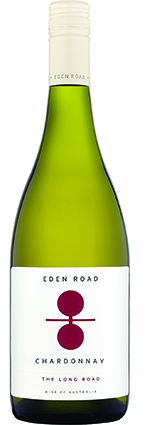
But in 2019, after taking a majority stake in Eden Road Wines, Murrumbateman, Wiggs brought Riek’s vineyard under the Eden Road banner. Riek’s site is now Eden Road Lake George Vineyard. Its grapes contribute to several Eden Road wines, including the new Cullarin Block 71 range, sourced exclusively from Riek’s historic vineyard.
In 2018 the Karelas family sold the Madew–Westering property, now trading as Lake George Winery, to Sarah and Anthony McDougall, making them the third custodians, after the Madew and Karelas families, of the vines planted by Geoff Hood in 1973.
Displayed in Westering Restaurant, Lake George Winery, Hood’s hand-written record details his planting of ‘7 acres’ of cabernet sauvignon, chardonnay, riesling and traminer between August and November 1973, and cabernet sauvignon and semillon in October and November 1975.
Though Kirk and Riek were first to plant, others had similar plans. In 1973, five more Canberra vineyards were planted. Around Murrumbateman, Ken Helm established what we now know as Helm Wines, Wing Commander Harvey Smith planted Doonkuna Estate (now Eden Road Wines) and Geoff and Trish Middleton set up Broughton Park (now Murrumbateman Wines).
On Edgar Riek’s northern boundary on Lake George’s north-western shore, Captain Geoff Hood planted Westering Vineyard (now Lake George Winery). And high up on the Lake George escarpment, east of the Federal Highway, Dr Max Blake planted Shingle House (later Brooks Creek, then part of Little Bridge Partners, but now abandoned).
In this pattern Canberra’s wine industry developed over the next two decades. Individuals mainly from scientific and academic backgrounds, some with PhDs, established small holdings – supported initially by professional salaries and unrelenting work. The vineyards, scattered widely around Canberra, varied in altitude from around 550 metres to 860 metres.
Vineyards were largely in NSW, sprinkled along the Barton Highway, between Spring Range in the south to Yass in the north in what we loosely call Murrumbateman; at Wallaroo on the Murrumbidgee slopes; around Sutton-Gundaroo; along the elevated Lake George–Bungendore escarpment; on the lower slopes of the Cullarin Range, hugging Lake George’s north-western shore; with one outlier to the east of Lake George at Lake Bathurst, and another, since removed, at Queanbeyan. Only Pialligo Estate and Mount Majura Vineyard lay within the ACT.
By the mid-nineties, district heroes, shiraz and riesling, had only partly emerged (led by Helm Wines and Clonakilla respectively) while small makers across the district had built strong individual followings.
Then something big happened. Its positive effect on the industry’s scale and quality continues today – albeit if not precisely as foreseen by its architects.
In May 1997, then ACT Chief Minister Kate Carnell announced an agreement between her government and South Australian winemaker BRL Hardy Limited. She says she stitched up the agreement with the help of Canberra liquor retailer Jim Murphy.
Carnell recalls seeing opportunities for Canberra wine as part of regional tourism. However, she believed a lack of scale restrained the local industry. ‘Wine fits well into regional tourism but to do that it needed a capital infusion. Canberra’s wineries were small and undercapitalised. If a big operator could invest substantially in the district it might give small operators certainty and confidence to invest’.
Her government offered BRL an assistance package totalling $2m – including land valued at $980,000 – and access to cheap grey water. In return BRL’s Stephen Millar pledged to invest $10million in new Canberra vineyards, winery, and cellar-door complex, to expand grape-buying contracts with independent growers and to develop a Canberra wine brand.
Hardys quickly built the Kamberra cellar door, entertainment complex and high-capacity winery at Watson. The company planned on processing thousands of tons of regional grapes annually and on launching two Canberra wine brands, Kamberra and Meeting Place. To scale up local grape supply, Hardys established an 83-hectare vineyard at Holt and offered attractive, indeed irresistible, fixed-price contracts to existing and would-be grape growers.
A decade later Hardys, departed Canberra. It ceased local grape and wine production and on short notice stopped taking grapes from growers. Most survived the shock by starting or expanding their own wine brands or by selling grapes to existing local vignerons. Their survival permanently increased Canberra’s grape supply.
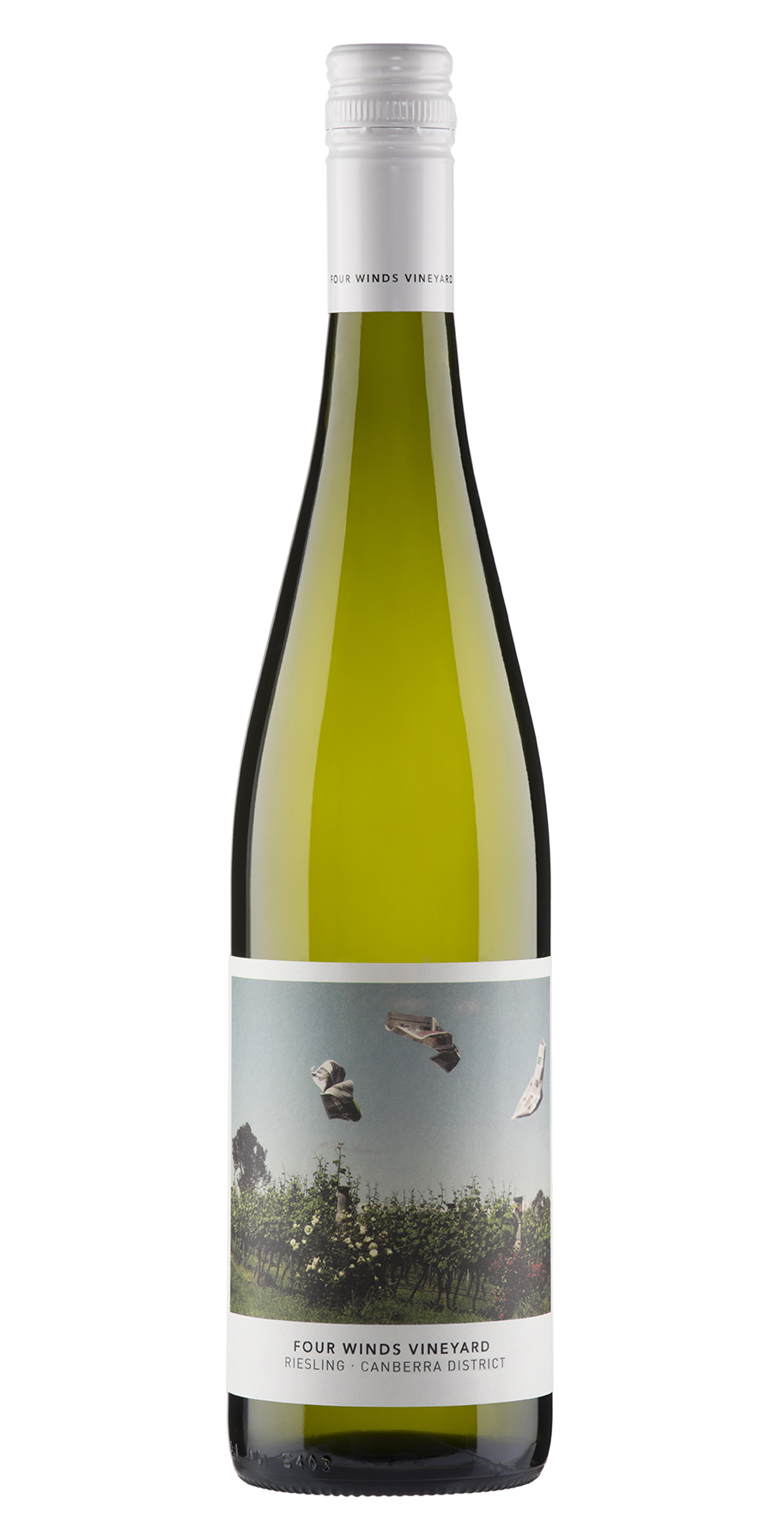
Among the survivors were Jennie and Wayne Fischer’s 14-hectare Murrumbateman vineyard (currently contracted to Nick O’Leary and Alex McKay), Rob and Sue Bruce’s 20-hectare Poachers vineyard (with son Will now making wine), the Lunney family’s 12.5-hectare Four Winds Vineyard (now run by daughter Sarah Collingwood and husband John Collingwood), and the Parker family’s 22-hectare Long Rail Gully vineyard (with Richard Parker growing, making and bottling wine on site).
Shaw Vineyard Estate owner, Graeme Shaw, recalls, ‘When Constellation Brands acquired BRL Hardy [in 2003] the culture changed the day they took over. They were not interested in Canberra at all. There was stupidity. They tried to get people to abandon their grape contracts. Those who held out got a good deal, others got a poor deal. We got paid out three years and didn’t deliver a single grape to them. They didn’t want them’.
Shaw’s relationship with Hardys began when he won the contract to build their winery–cellar door complex. This led to a deal to plant 32-hectares, backed by a 10-year grape supply contract. With his wife and Ann and son Michael, Shaw completed a viticulture course and planted their Murrumbateman vineyard in 1999 and 2000. It remains, as far as I can ascertain, Canberra’s largest.
The contract allowed the Shaws to keep part of the crop and build their own brand, which they did on a scale not seen before in Canberra, with the exception of the failed BRL Hardy venture. A large, purpose-designed cellar door-restaurant, opened in 2005, expanded visitor experience beyond wine through the sale of Italian ceramics and balsamic vinegar. And in 2018 Shaw opened a new cellar-door wine-club -lounge building, separate from the restaurant and store.
Winemakers Alex McKay and Nick O’Leary decided to remain in Canberra following Hardy’s departure. Through Edgar Riek’s influence, Theo and Sam Karelas engaged the pair to overhaul the Lake George vineyard they’d bought from Riek a decade earlier. McKay was to also to make the wines and both were free to develop their own brands, Collector Wines, Nick O’Leary Wines and the jointly owned Bourke Street Wines. O’Leary and McKay went their own ways in 2010 but still work closely together.
At Kardinia Winery, Murrumbateman, McKay, with French winemaker Leonore Salancon, makes Collector wines, some of the Bourke Street range and wines under contract for other brands. McKay believes one of the most important developments for Canberra wine in recent years has been representation in the cities by some of Australia’s most prestigious distributors. His own wines sit in one of the most illustrious portfolios of all under Robert Hill-Smith’s Negociants Australia.
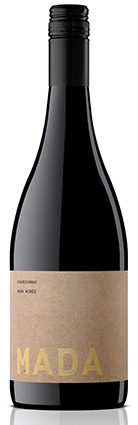
Nick O’Leary has his own 10-hectare vineyard and winery in the Wallaroo area, with plans to expand to 22-hectares over the next few years. The large winery produces the O’Leary brand, some of the Bourke Street products, and a range of contract wines. Indeed, the busy winery feels like a cross between production workshop and university as O’Leary mentors, and is challenged by, a new generation of Canberra winemakers developing their own styles: Hamish Young’s highly acclaimed Mada Wines, Caleb Wearne’s Whitton Farm, and Jake Carter’s Sholto.
As the Canberra winery industry celebrates its fiftieth birthday, the reality is that what we call the Canberra District relies increasingly on grapes from neighbouring regions, particularly but not limited to Hilltops and Tumbarumba. Grapes from these regions give volume and viability to some makers and enable production of particular wine styles by others. These areas are already deeply enmeshed in the Canberra wine industry.
With security of supply a growing concern to vignerons across the district, perhaps the most significant news of 2021 will be the construction of Jason and Alicia Brown’s Moppity winery and cellar door complex on Jeir Creek, to the south of Murrumbateman. The development will bring production from the Brown’s extensive vineyard holdings in Hilltops and Tumbarumba to Canberra.
And as the Brown’s sell much of their fruit, some Canberra makers hope proximity means first dibs for local vignerons.
The Browns own the 69-hectare Hilltops region Moppity Vineyard, 70-hectare Coppabella Vineyard, Tumbarumba, and the 10-hectare Kerralee vineyard, Murrumbateman, site of the new development. Jason writes, ‘We have the DA approved and should start building this side of Christmas or possibly early new year’.
The new winery will be by far the biggest in Canberra, adding to the industry’s scale and multi-layered offerings accrued over 50 years by the industry’s 40 or so independent vignerons and many independent growers.
It’s been a hands-on, non-stop endeavour by so many couples, families and individuals. The industry’s new branding, launched on 29 November 2021, captures the spirit of this interaction between our landscapes, vines, people and wine. Particularly moving is an audio-visual presentation, with song sung by Marty K (written by K and Tallagandra Hill’s David Faulks ) and Sammy Hawker’s evocative images.
Canberra District wines – a degustation
WHITES
Lark Hill Canberra District Gruner Veltliner 2021
Vines arrived high on Lake George escarpment, between the Federal Highway and Bungendore, in 1973 (Max Blake’s Shingle House), 1976 (Affleck) and 1978 (Lark Hill). Lamberts, now reinvented as Contentious Character, arrived in 1990, followed recently by Enotria Wines. Lark Hill vineyard, peaking at 860-metres, sits about 200 metres higher than Murrumbateman. The site turned out to be too cool for the cabernet, shiraz and merlot Dr David and Sue Carpenter originally planted there. But riesling, chardonnay and pinot succeeded. Their son Chris later successfully introduced the Austrian variety gruner veltliner – a unique, delicious, dry white, fruity and peppery at the same time.
Pankhurst Canberra District Arneis 2019 $30
In 1986 vineyards spread into the Wallaroo area, on the edge of the Murrumbidgee Valley, West of Hall. Dr Roger and Faye Harris established Brindabella Hills, Alwyn Lane established Park Lane (now Surveyors Hill) and Allan and Christine Pankhurst planted the five-hectare Pankhurst vineyard. In 2016 the Pankhursts grafted Rhone Valley variety marsanne and Piedmontese variety arneis onto semillon and sauvignon rootstocks. Allan Pankhurst says, ‘We tried all sorts of styles of arneis in Piedmont and preferred the unoaked ones’. And that’s how Andrew McEwin made their delicious 2019, no oak, and all fruit, reminiscent of pear and melon-rind, bone-dry and grippy.
Helm Canberra District Classic Dry Riesling 2019 $38
Canberra wine pioneer Ken Helm championed riesling long before the variety became Canberra’s specialty white. He planted riesling in 1973, following plantings in 1971 by Dr John Kirk at Clonakilla and in 1973 by Geoff Hood at Westering Vineyard, Lake George. While the variety thrives across the district (it can’t fail says John Kirk), Helm’s promotion of it through the International Riesling Challenge lifted its quality across Canberra and profile nationally. And his own relentless fine-tuning keeps Helm’s two dry rieslings, Classic Dry and Premium, up there with the best in Australia. The 2019 Classic Dry shows the benefit of almost three years’ age, which intensifies the mouth-watering, lemony varietal flavour.
Collector Lamp Lit Canberra District Marsanne 2019 $38
Alex McKay explored Canberra’s vineyards from an early age. As a youth he worked with Edgar Riek at Lake George and later as BRL Hardy’s Canberra winemaker worked with growers across the region. Striking out on his own after Hardy’s departure from Canberra, Alex deepened the intimate connection between vineyards and winemaking. His ever inquisitive, inventive approach produces wine styles ranging from profound expressions of cool-climate shiraz, to earthy sangiovese, to this savoury, taut-textured, barrel-fermented blend of the Rhone Valley varieties marsanne, roussanne and viognier. It fills out pleasingly with a few years’ bottle age. Sourced from east of Murrumbateman, for release 1 February 2022.
Gallagher Sparkling Duet Pinot Noir Chardonnay NV $35
It can be said that Canberra selected its winemakers: Canberra existed, people lived here and some planted vineyards in proximity to their homes. Gallagher, on the other hand, chose Canberra. Researching suitable climates to grow shiraz in the late 1980s he selected Canberra before the variety became our signature red. Moving from Victoria, he planted the variety here in 1995 and subsequently made excellent long-lived shiraz. But he also makes exceptional riesling (like the gorgeous 2021), and specialises in traditional-method bubblies. The excellent Duet, made from locally grown pinot noir and chardonnay combines vibrant lemony flavour, fine bubbles and the texture and flavour complexity derived from maturation on spent yeast cells.
REDS
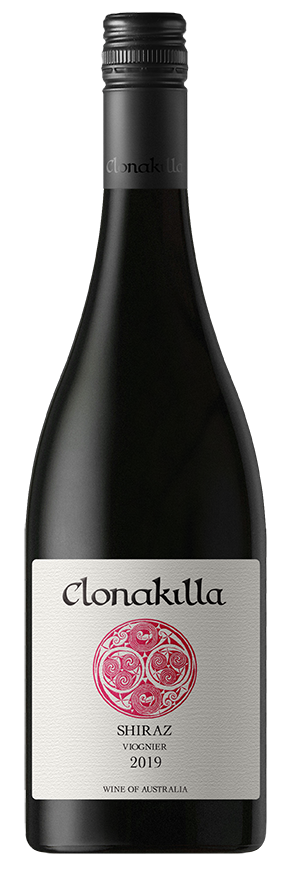
Clonakilla Canberra District Shiraz Viognier 2019 $110
Based on a temperature match, John Kirk established Clonakilla in 1971 with the Bordeaux varieties in mind. However, he soon discovered Canberra’s continental climate to be drier, with twice the evaporation rate of maritime Bordeaux, and more frost prone. The Bordeaux varieties survived but failed to shine. Shiraz and riesling proved to be the best performers of the early plantings. He made the first straight shiraz in 1990 and in 1992, following son Tim Kirk’s visit to France’s Cote-Rotie, made the first shiraz–viognier blend. The stunning 2019 offers exceptionally opulent fruit flavour meshed with assertive but fine, supple tannins.
Cullarin Block 71 Canberra District Syrah 2019 $55
Edgar Riek established Cullarin Vineyard, Lake George, in 1971 with Burgundy in mind. Chardonnay and pinot noir thrived. Indeed, Riek’s outstanding pinots inspired Jim Lumbers and Anne Caine to establish Lerida Estate on Riek’s southern boundary in 1997. But shiraz became the district hero. And this wine from old vines on Riek’s Lake George vineyard shows the qualities that put shiraz at the pinnacle: fragrance, fruit, savour and beautiful interaction between fruit and tannin. Eden Road winemaker Celine Rousseau says she added a tiny drop of viognier to the wine. The 2019 vintage won three trophies in the 2021 Australian Highland Wine Show. 2018 also available.
Mount Majura Canberra District Mondeuse 2021 $27.20–$34
In 1988 Dinny Killen established Mount Majura vineyard in collaboration with Dr Edgar Riek. Under Frank van de Loo the vineyard developed over time to include tempranillo (its signature red), graciano, touriga, mondeuse and ansonica. Van de Loo also hopes, in future, to plant albarino and altesse, making Mount Majura perhaps the most varietally diverse of Canberra’s estate-based producers. Based on this arresting mondeuse, bring on diversity! While often blended, this Savoy, France, variety offers a unique character on its own: lighter coloured and intensely aromatic, combining spice, black pepper and cherry-like fruit in the aroma and on the dry, gentle palate.
Nick O’Leary Seven Gates Canberra District Tempranillo 2019 $32
Nick O’Leary remained in Canberra following the departure of Hardys. He developed his own brand and, in the process, established deep connections with grape growers in Canberra and surrounding regions. He later bought a vineyard at Wallaroo, built a winery on site and has been extending the vineyard ever since. O’Leary’s $58 elegant but powerful Bolaro shiraz sits among the best and most awarded from Canberra. And the breeding shows, too, in his $30 Canberra District shiraz and $34 Heywood shiraz. O’Leary’s 2019 tempranillo, source mainly from his own vineyard, delivers plum-like and savoury varietal flavour, with a firm, taut, tannic structure.
Long Rail Gully Canberra District Shiraz 2019 $28
In 1998, encouraged by Hardys entry into Canberra, the late Garry Parker, wife Barbara, and son Richard planted Long Rail Gully’s 22-hectare vineyard. Richard Parker says a fixed-term contract with Hardys underpinned the venture in the short term, but the family always planned to develop their own brand. After Hardy’s departure Richard Parker continued making and bottling wine on site and selling fruit to local vignerons. Parker’s 2019 shows the drink-now appeal of Canberra’s medium-bodied shiraz style. It offers ripe, spicy fruit flavour with a juicy mid-palate and soft, easy tannins, subtly supported by maturation in oak barrels.
An abridged version of this story appeared in The Canberra Times Tuesday 7 December 2021
© Chris Shanahan 2021